


ice age
Introduction
What would happen if glaciers started to expand and cover the Earth like they did 18,000 years ago? How much damage would this cause to our society? Would the ice destroy everything in its path? Would we be able to go on and live like we do today? Would there be any warning that an ice age is coming? Would we have time to adjust, and if so how much time? Scientist are considering these very questions today. In order to answer them scientist are studying what is left of the past ice ages to determine how they began and ended, and what to expect if another were to occur. Plus, through studying the past climate changes scientist have began the task of predicting future climate changes. This unit looks at what causes Ice ages, how they come to an end, and what the future climate might hold.
The Quest
What would happen if glaciers started to expand and cover the Earth like they did 18,000 years ago? How much damage would this cause to our society? Would the ice destroy everything in its path? Would we be able to go on and live like we do today? Would there be any warning that an ice age is coming? Would we have time to adjust, and if so how much time? Scientist are considering these very questions today. In order to answer them scientist are studying what is left of the past ice ages to determine how they began and ended, and what to expect if another were to occur. Plus, through studying the past climate changes scientist have began the task of predicting future climate changes. This unit looks at what causes Ice ages, how they come to an end, and what the future climate might hold.
The Quest
The United Nations has hired your group to investigate whether or not there will be another ice age. Your job is to present evidence for and against an ice age ensuing, and if one does ensue what is expected to happen and how long until ice begins to re-advance.
Be creative and carefully read the instructions!
The instructor will assign students to one of four groups. The four groups will be: scientific evidence for another ice age, scientific evidence against another ice age, what will happen if another ice age ensues, how long will it take for advancing ice and changing climate to disturb our way of life. Each group will present their findings to the class.
Be creative and carefully read the instructions!
The instructor will assign students to one of four groups. The four groups will be: scientific evidence for another ice age, scientific evidence against another ice age, what will happen if another ice age ensues, how long will it take for advancing ice and changing climate to disturb our way of life. Each group will present their findings to the class.
The Process
Group members and roles will be assigned by the instructor.
Group members should read the assignment carefully.
Groups should divide the resource list between individuals.
Individual group members should check out their resource links and download information they might need to produce their group's product.
Groups should set a time to gather all information together and produce products.
After sufficient research time, a design for the product should be started.
Group members should design their product, check spelling and have another group review their product.
Group members should gather and organize a presentation for the client.
Group members and roles will be assigned by the instructor.
Group members should read the assignment carefully.
Groups should divide the resource list between individuals.
Individual group members should check out their resource links and download information they might need to produce their group's product.
Groups should set a time to gather all information together and produce products.
After sufficient research time, a design for the product should be started.
Group members should design their product, check spelling and have another group review their product.
Group members should gather and organize a presentation for the client.
Hints
Visuals, overheads, charts and posters should be neat, simple and legible.
Plan before you produce!
Organize your information with an outline, concept map or a flow chart.
Visuals, overheads, charts and posters should be neat, simple and legible.
Plan before you produce!
Organize your information with an outline, concept map or a flow chart.
Roles and Resources
In the tables below are hot linked resources for groups to obtain information to produce their product. Additional information may be obtained through searches on the Internet http://www.altavista.com or http://www.google.com
Scientific Evidence for Future Glaciation Task: Research past Ice ages. When did they start? When did they end? What similarities are their between the current climate and the climate of the past? What could cause another ice age? What can we measure to determine if another ice age may occur?
Product: Overhead, chart or PowerPoint that answers the above questions. Provide a probability of another ice age occurring (high, medium, low).
Resources:
Past Climate
What is an ice age? A-Z Science
When have ice age occurred? http://www.museum.state.il.us/exhibits/ice_ages/when_ice_ages.html
Snowball Earth. http://www.sciam.com/2000/0100issue/0100hoffman.html
Rapid Climate Change (look through from introduction to climate and choices) http://www.sigmaxi.org/amsci/articles/99articles/taylor.html
Younger Dryas: http://www.doc.mmu.ac.uk/aric/gccsg/5-3-2-1.html
http://earth.agu.org/revgeophys/mayews01/node6.html
http://www.sprl.umich.edu/GCL/globalchange1/fall2000/lectures/blue_planet/younger_dryas.html
Late Pleistocene Environment: http://geography.about.com/gi/dynamic/offsite.htm?site=http%3A%2F%2Fwww.museum.state.il.us%2Fexhibits%2Fice_ages%2F
Current Climate
What are we in? http://geography.about.com/library/weekly/aa091597.htm
Trends: http://geography.about.com/gi/dynamic/offsite.htm?site=http%3A%2F%2Fwww.epa.gov%2Fglobalwarming%2Findex.html
Gulf Stream: http://www.deos.tudelft.nl/altim/gulfstream/
Atmosphere Circulation: http://www.geog.ouc.bc.ca/physgeog/contents/7p.html
Causes of Climate Change
Milankovitch Cycles: http://deschutes.gso.uri.edu/~rutherfo/milankovitch.html
http://geography.about.com/gi/dynamic/offsite.htm?site=http%3A%2F%2Fwww.museum.state.il.us%2Fexhibits%2Fice_ages%2F
Global Warming: http://environment.about.com/library/weekly/blclimate8.htm
http://geography.about.com/gi/dynamic/offsite.htm?site=http%3A%2F%2Fwww.epa.gov%2Fglobalwarming%2Findex.html
Warming Causing Cooling: http://geography.about.com/gi/dynamic/offsite.htm?site=http%3A%2F%2Fwww.theatlantic.com%2Fissues%2F98jan%2Fclimate.htm
http://geography.about.com/gi/dynamic/offsite.htm?site=http%3A%2F%2Fearthobservatory.nasa.gov%2FStudy%2FPolarParadox%2F
Scientific Evidence Against Future Glaciation Task: Research past Ice ages. When did they start? When did they end? What differences are their between the current climate and the climate of the past? What would deter another ice age from occurring? What can we measure to determine if another ice age will or will not occur?
Product: Overhead, chart or PowerPoint that answers the above questions. Provide a probability of another ice age occurring (high, medium, low). Current coal deposit climate
Resources:
Past Climate
What is an ice age? A-Z Science
When have ice age occurred? http://www.museum.state.il.us/exhibits/ice_ages/when_ice_ages.html
Snowball Earth. http://www.sciam.com/2000/0100issue/0100hoffman.html
Younger Dryas: http://www.doc.mmu.ac.uk/aric/gccsg/5-3-2-1.html
http://earth.agu.org/revgeophys/mayews01/node6.html
http://www.sprl.umich.edu/GCL/globalchange1/fall2000/lectures/blue_planet/younger_dryas.html
Late Pleistocene Environment: http://geography.about.com/gi/dynamic/offsite.htm?site=http%3A%2F%2Fwww.museum.state.il.us%2Fexhibits%2Fice_ages%2F
Carboniferous Period: http://www.geobop.com/paleozoo/Time/Paleozoic/Pennsylvanian/
http://members.aol.com/JMFabiny/Pennsyl.html
http://www.ucmp.berkeley.edu/carboniferous/carblife.html
Current Climate
What are we in? http://geography.about.com/library/weekly/aa091597.htm
http://www.nsf.gov/search97cgi/vtopic
Trends: http://geography.about.com/gi/dynamic/offsite.htm?site=http%3A%2F%2Fwww.epa.gov%2Fglobalwarming%2Findex.html
Gulf Stream: http://www.deos.tudelft.nl/altim/gulfstream/
ftp://wind.colorado.edu/pub/gom/nrt/gif.mean/latest.gif
Ocean Temperature: http://www.cdc.noaa.gov/map/images/rnl/sfctmpmer_90b.rnl.gif
http://www.nsf.gov/search97cgi/vtopic
Atmosphere Circulation: http://www.geog.ouc.bc.ca/physgeog/contents/7p.html
Causes of Climate Change
Overview: http://www.geog.ouc.bc.ca/physgeog/contents/7y.html
http://www.gcrio.org/gwcc/part1.html
http://www.clearlight.com/~mhieb/WVFossils/ice_ages.html
Milankovitch Cycles: http://deschutes.gso.uri.edu/~rutherfo/milankovitch.html
http://geography.about.com/gi/dynamic/offsite.htm?site=http%3A%2F%2Fwww.museum.state.il.us%2Fexhibits%2Fice_ages%2F
Global Warming: http://environment.about.com/library/weekly/blclimate8.htm
http://geography.about.com/gi/dynamic/offsite.htm?site=http%3A%2F%2Fwww.epa.gov%2Fglobalwarming%2Findex.html
http://www.epa.gov/globalwarming/kids/
http://www.climatehotmap.org/
http://www.ngdc.noaa.gov/paleo/globalwarming/paleostory.html
Warming Causing Cooling: http://geography.about.com/gi/dynamic/offsite.htm?site=http%3A%2F%2Fwww.theatlantic.com%2Fissues%2F98jan%2Fclimate.htm
http://geography.about.com/gi/dynamic/offsite.htm?site=http%3A%2F%2Fearthobservatory.nasa.gov%2FStudy%2FPolarParadox%2F
Effects of an Ice Age
Task: Research past ice ages and determine what effects their would be on society if an ice age occurred.
Product: Chart, overhead or PowerPoint to support your hypothesis.
Resources:
Past Climate
What is an ice age? A-Z Science
When have ice age occurred? http://www.museum.state.il.us/exhibits/ice_ages/when_ice_ages.html
Snowball Earth. http://www.sciam.com/2000/0100issue/0100hoffman.html
Rapid Climate Change (look through from introduction to climate and choices) http://www.sigmaxi.org/amsci/articles/99articles/taylor.html
Younger Dryas: http://www.doc.mmu.ac.uk/aric/gccsg/5-3-2-1.html
http://earth.agu.org/revgeophys/mayews01/node6.html
http://www.sprl.umich.edu/GCL/globalchange1/fall2000/lectures/blue_planet/younger_dryas.html
Late Pleistocene Environment: http://geography.about.com/gi/dynamic/offsite.htm?site=http%3A%2F%2Fwww.museum.state.il.us%2Fexhibits%2Fice_ages%2F
Effects
Glacial Landscape: http://www.aqd.nps.gov/grd/parks/iatr/
http://www.glacier.rice.edu/land/5_glaciallandforms.html
Ice Shapes: http://www.glacier.rice.edu/land/5_iceofallshapes.html
Ice Flow: http://www.glacier.rice.edu/land/5_icemovement.html
Glacial Hazards: http://vulcan.wr.usgs.gov/Glossary/Glaciers/description_glaciers_hazards.html
Time Frame
Task: Research past ice ages. Determine how long it would take for glaciers to re-advance and effect our civilization. Determine how long the ice age would last.
Product: Chart, overhead or PowerPoint to support your hypothesis.
Resources:
Past Climate
What is an ice age? A-Z Science
When have ice age occurred? http://www.museum.state.il.us/exhibits/ice_ages/when_ice_ages.html
Snowball Earth. http://www.sciam.com/2000/0100issue/0100hoffman.html
Rapid Climate Change (look through from introduction to climate and choices) http://www.sigmaxi.org/amsci/articles/99articles/taylor.html
Younger Drays: http://www.doc.mmu.ac.uk/aric/gccsg/5-3-2-1.html
http://earth.agu.org/revgeophys/mayews01/node6.html
http://www.sprl.umich.edu/GCL/globalchange1/fall2000/lectures/blue_planet/younger_dryas.html
Late Pleistocene Environment: http://geography.about.com/gi/dynamic/offsite.htm?site=http%3A%2F%2Fwww.museum.state.il.us%2Fexhibits%2Fice_ages%2F
In the tables below are hot linked resources for groups to obtain information to produce their product. Additional information may be obtained through searches on the Internet http://www.altavista.com or http://www.google.com
Scientific Evidence for Future Glaciation Task: Research past Ice ages. When did they start? When did they end? What similarities are their between the current climate and the climate of the past? What could cause another ice age? What can we measure to determine if another ice age may occur?
Product: Overhead, chart or PowerPoint that answers the above questions. Provide a probability of another ice age occurring (high, medium, low).
Resources:
Past Climate
What is an ice age? A-Z Science
When have ice age occurred? http://www.museum.state.il.us/exhibits/ice_ages/when_ice_ages.html
Snowball Earth. http://www.sciam.com/2000/0100issue/0100hoffman.html
Rapid Climate Change (look through from introduction to climate and choices) http://www.sigmaxi.org/amsci/articles/99articles/taylor.html
Younger Dryas: http://www.doc.mmu.ac.uk/aric/gccsg/5-3-2-1.html
http://earth.agu.org/revgeophys/mayews01/node6.html
http://www.sprl.umich.edu/GCL/globalchange1/fall2000/lectures/blue_planet/younger_dryas.html
Late Pleistocene Environment: http://geography.about.com/gi/dynamic/offsite.htm?site=http%3A%2F%2Fwww.museum.state.il.us%2Fexhibits%2Fice_ages%2F
Current Climate
What are we in? http://geography.about.com/library/weekly/aa091597.htm
Trends: http://geography.about.com/gi/dynamic/offsite.htm?site=http%3A%2F%2Fwww.epa.gov%2Fglobalwarming%2Findex.html
Gulf Stream: http://www.deos.tudelft.nl/altim/gulfstream/
Atmosphere Circulation: http://www.geog.ouc.bc.ca/physgeog/contents/7p.html
Causes of Climate Change
Milankovitch Cycles: http://deschutes.gso.uri.edu/~rutherfo/milankovitch.html
http://geography.about.com/gi/dynamic/offsite.htm?site=http%3A%2F%2Fwww.museum.state.il.us%2Fexhibits%2Fice_ages%2F
Global Warming: http://environment.about.com/library/weekly/blclimate8.htm
http://geography.about.com/gi/dynamic/offsite.htm?site=http%3A%2F%2Fwww.epa.gov%2Fglobalwarming%2Findex.html
Warming Causing Cooling: http://geography.about.com/gi/dynamic/offsite.htm?site=http%3A%2F%2Fwww.theatlantic.com%2Fissues%2F98jan%2Fclimate.htm
http://geography.about.com/gi/dynamic/offsite.htm?site=http%3A%2F%2Fearthobservatory.nasa.gov%2FStudy%2FPolarParadox%2F
Scientific Evidence Against Future Glaciation Task: Research past Ice ages. When did they start? When did they end? What differences are their between the current climate and the climate of the past? What would deter another ice age from occurring? What can we measure to determine if another ice age will or will not occur?
Product: Overhead, chart or PowerPoint that answers the above questions. Provide a probability of another ice age occurring (high, medium, low). Current coal deposit climate
Resources:
Past Climate
What is an ice age? A-Z Science
When have ice age occurred? http://www.museum.state.il.us/exhibits/ice_ages/when_ice_ages.html
Snowball Earth. http://www.sciam.com/2000/0100issue/0100hoffman.html
Younger Dryas: http://www.doc.mmu.ac.uk/aric/gccsg/5-3-2-1.html
http://earth.agu.org/revgeophys/mayews01/node6.html
http://www.sprl.umich.edu/GCL/globalchange1/fall2000/lectures/blue_planet/younger_dryas.html
Late Pleistocene Environment: http://geography.about.com/gi/dynamic/offsite.htm?site=http%3A%2F%2Fwww.museum.state.il.us%2Fexhibits%2Fice_ages%2F
Carboniferous Period: http://www.geobop.com/paleozoo/Time/Paleozoic/Pennsylvanian/
http://members.aol.com/JMFabiny/Pennsyl.html
http://www.ucmp.berkeley.edu/carboniferous/carblife.html
Current Climate
What are we in? http://geography.about.com/library/weekly/aa091597.htm
http://www.nsf.gov/search97cgi/vtopic
Trends: http://geography.about.com/gi/dynamic/offsite.htm?site=http%3A%2F%2Fwww.epa.gov%2Fglobalwarming%2Findex.html
Gulf Stream: http://www.deos.tudelft.nl/altim/gulfstream/
ftp://wind.colorado.edu/pub/gom/nrt/gif.mean/latest.gif

Ocean Temperature: http://www.cdc.noaa.gov/map/images/rnl/sfctmpmer_90b.rnl.gif
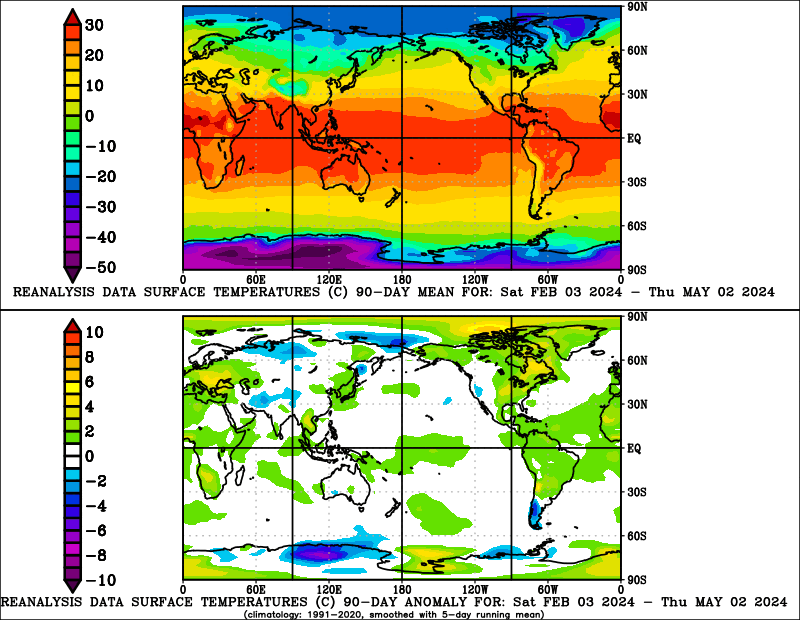
http://www.nsf.gov/search97cgi/vtopic
Atmosphere Circulation: http://www.geog.ouc.bc.ca/physgeog/contents/7p.html
Causes of Climate Change
Overview: http://www.geog.ouc.bc.ca/physgeog/contents/7y.html
http://www.gcrio.org/gwcc/part1.html
http://www.clearlight.com/~mhieb/WVFossils/ice_ages.html
Milankovitch Cycles: http://deschutes.gso.uri.edu/~rutherfo/milankovitch.html
http://geography.about.com/gi/dynamic/offsite.htm?site=http%3A%2F%2Fwww.museum.state.il.us%2Fexhibits%2Fice_ages%2F
Global Warming: http://environment.about.com/library/weekly/blclimate8.htm
http://geography.about.com/gi/dynamic/offsite.htm?site=http%3A%2F%2Fwww.epa.gov%2Fglobalwarming%2Findex.html
http://www.epa.gov/globalwarming/kids/
http://www.climatehotmap.org/
http://www.ngdc.noaa.gov/paleo/globalwarming/paleostory.html
Warming Causing Cooling: http://geography.about.com/gi/dynamic/offsite.htm?site=http%3A%2F%2Fwww.theatlantic.com%2Fissues%2F98jan%2Fclimate.htm
http://geography.about.com/gi/dynamic/offsite.htm?site=http%3A%2F%2Fearthobservatory.nasa.gov%2FStudy%2FPolarParadox%2F
Effects of an Ice Age
Task: Research past ice ages and determine what effects their would be on society if an ice age occurred.
Product: Chart, overhead or PowerPoint to support your hypothesis.
Resources:
Past Climate
What is an ice age? A-Z Science
When have ice age occurred? http://www.museum.state.il.us/exhibits/ice_ages/when_ice_ages.html
Snowball Earth. http://www.sciam.com/2000/0100issue/0100hoffman.html
Rapid Climate Change (look through from introduction to climate and choices) http://www.sigmaxi.org/amsci/articles/99articles/taylor.html
Younger Dryas: http://www.doc.mmu.ac.uk/aric/gccsg/5-3-2-1.html
http://earth.agu.org/revgeophys/mayews01/node6.html
http://www.sprl.umich.edu/GCL/globalchange1/fall2000/lectures/blue_planet/younger_dryas.html
Late Pleistocene Environment: http://geography.about.com/gi/dynamic/offsite.htm?site=http%3A%2F%2Fwww.museum.state.il.us%2Fexhibits%2Fice_ages%2F
Effects
Glacial Landscape: http://www.aqd.nps.gov/grd/parks/iatr/
http://www.glacier.rice.edu/land/5_glaciallandforms.html
Ice Shapes: http://www.glacier.rice.edu/land/5_iceofallshapes.html
Ice Flow: http://www.glacier.rice.edu/land/5_icemovement.html
Glacial Hazards: http://vulcan.wr.usgs.gov/Glossary/Glaciers/description_glaciers_hazards.html
Time Frame
Task: Research past ice ages. Determine how long it would take for glaciers to re-advance and effect our civilization. Determine how long the ice age would last.
Product: Chart, overhead or PowerPoint to support your hypothesis.
Resources:
Past Climate
What is an ice age? A-Z Science
When have ice age occurred? http://www.museum.state.il.us/exhibits/ice_ages/when_ice_ages.html
Snowball Earth. http://www.sciam.com/2000/0100issue/0100hoffman.html
Rapid Climate Change (look through from introduction to climate and choices) http://www.sigmaxi.org/amsci/articles/99articles/taylor.html
Younger Drays: http://www.doc.mmu.ac.uk/aric/gccsg/5-3-2-1.html
http://earth.agu.org/revgeophys/mayews01/node6.html
http://www.sprl.umich.edu/GCL/globalchange1/fall2000/lectures/blue_planet/younger_dryas.html
Late Pleistocene Environment: http://geography.about.com/gi/dynamic/offsite.htm?site=http%3A%2F%2Fwww.museum.state.il.us%2Fexhibits%2Fice_ages%2F
Evaluation Group Reports and Presentations
Research Time Utilization
1. Poor: The group needed continual reminders to get back to work.
2. Good: The group was usually on task, but needed an occasional reminder to get back to work; all work is appropriate.
3. Excellent: The group was always on task and did not need reminders to get back to work.
Participation in Project
1. Poor: Team effort was not visible. Group demonstrates some knowledge of their role.
2. Good: Team effort was visible. Knowledge of their role was visible and shows some organization.
3. Excellent: Team effort visible. The presentation was organized and demonstrates a knowledge of their subject.
Accuracy of Information During Project
1. Poor: The group's information was lacking in content and was not factually correct in many places. Information may not be pertinent to the presentation.
2. Good: The group's information was for the most part factually correct. Information may not be pertinent to the presentation.
3. Excellent: The group's information is factually correct and pertinent to the presentation.
Clarity of Presentation
1. Poor: The group's work is not well planned. The group was confused by much of the information presented. The group was not clear in explaining topics.
2. Good: The group's work is well planned. There seemed to be some minor confusion or misinterpretation of information.
3. Excellent: he group's work is well planned and clearly explained. The group showed a clear command of the information presented.
Research Time Utilization
1. Poor: The group needed continual reminders to get back to work.
2. Good: The group was usually on task, but needed an occasional reminder to get back to work; all work is appropriate.
3. Excellent: The group was always on task and did not need reminders to get back to work.
Participation in Project
1. Poor: Team effort was not visible. Group demonstrates some knowledge of their role.
2. Good: Team effort was visible. Knowledge of their role was visible and shows some organization.
3. Excellent: Team effort visible. The presentation was organized and demonstrates a knowledge of their subject.
Accuracy of Information During Project
1. Poor: The group's information was lacking in content and was not factually correct in many places. Information may not be pertinent to the presentation.
2. Good: The group's information was for the most part factually correct. Information may not be pertinent to the presentation.
3. Excellent: The group's information is factually correct and pertinent to the presentation.
Clarity of Presentation
1. Poor: The group's work is not well planned. The group was confused by much of the information presented. The group was not clear in explaining topics.
2. Good: The group's work is well planned. There seemed to be some minor confusion or misinterpretation of information.
3. Excellent: he group's work is well planned and clearly explained. The group showed a clear command of the information presented.
Conclusion
Congratulations! You now know about the past global climate of the Earth. You have successfully presented your findings to the United Nations and now they can make an informed decision about how to plan for the future. Do you think there will be another Ice Age? Why or why not?
Instructors' Notes
Congratulations! You now know about the past global climate of the Earth. You have successfully presented your findings to the United Nations and now they can make an informed decision about how to plan for the future. Do you think there will be another Ice Age? Why or why not?
Instructors' Notes
Explain how students can navigate through the Web Quest by using the hot-linked resources and the top-of-the-page links.
Provide materials for posters, overheads, maps and brochures for the products and presentations. If PowerPoint is available at your school, plan to make the software and hardware available.
For the Conclusion/Wrap-Up have each student write a paragraph responding to the question in the conclusion.
Suggested format and timeline for the Web Quest:
Suggested format and timeline for the Web Quest
Divide students into groups, assign and go over roles. 20-30 minutes
Group members download instructions and start using the hot-linked resources to gather information. 2 hours
Group members meet to share information. 1 hour 30 minutes
Groups produce their products. 3 hours
Groups plan and rehearse their presentation for the client. 45 minutes
Presentations 15-20 minutes each
Conclusion/ Wrap-Up 30 minutes
Optional Extension: Selected students read their paragraph to the entire class.
Labels: global warming climate change
posted by duque_teaches | 10:54 AM
|
0 comments
